
Knee Pain When Squatting? Try These 3 Adjustments
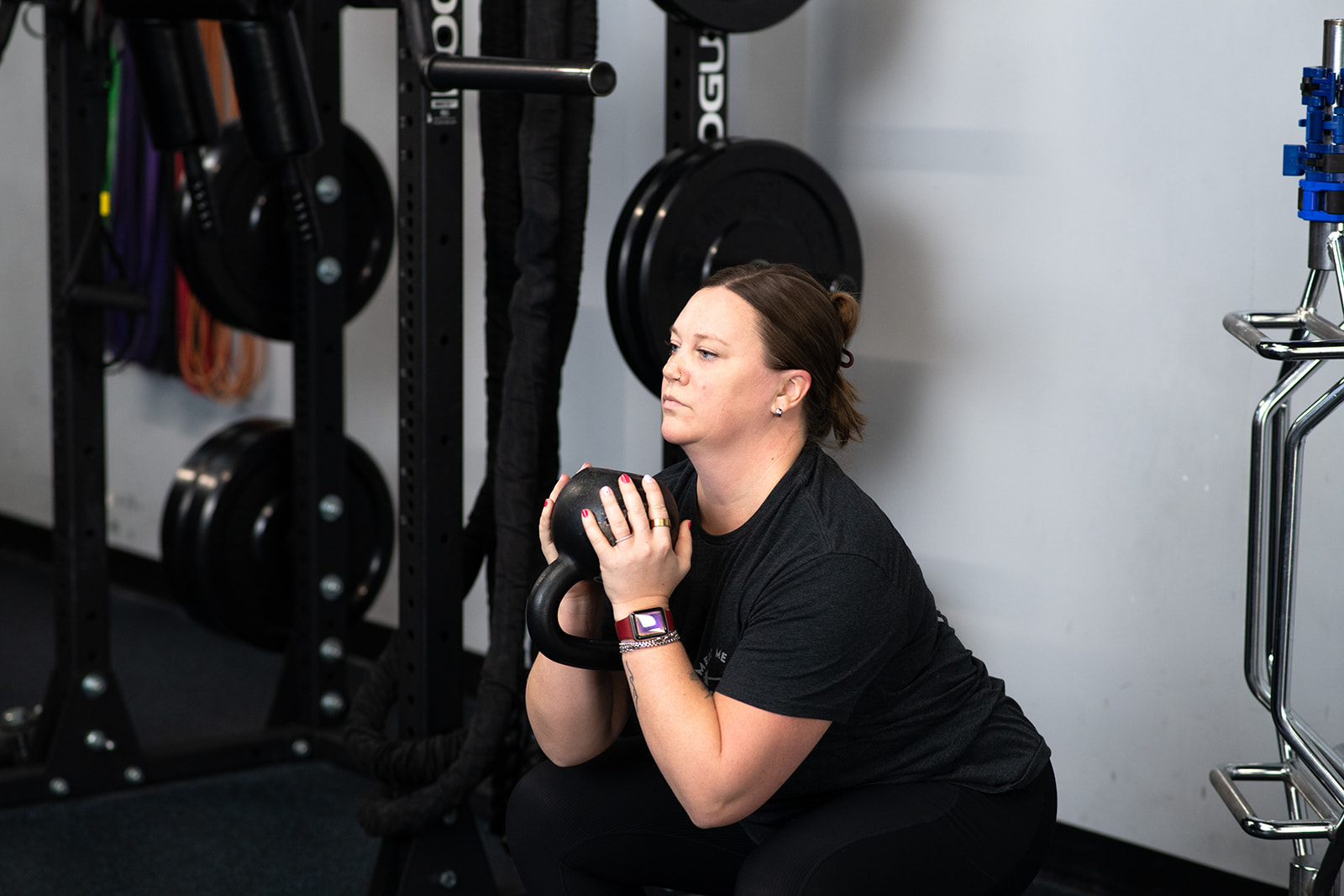
Do Squats Hurt Your Knees? Try These 3 Adjustments
If your knees hurt when you squat, you may not need to remove squats from your training completely. Changes to your technique, squat variation, or level of support may help you find a movement that feels better.
Why Do My Knees Hurt When I Squat?
Knee discomfort during squats can happen for a variety of reasons. Your squat mechanics, ankle mobility, balance, or the specific variation you're using can all affect how the movement feels.
Rather than immediately eliminating squats, it can be helpful to look at the movement itself and determine whether an adjustment makes sense.
1. Check How Your Knees Are Tracking
One of the first things to look at is how your knees move during the squat.
Your knees should generally track in line with your feet instead of collapsing inward. It is also normal for your knees to travel forward over your toes as you squat.
Slowing the movement down and focusing on control can make it easier to see where your position may need to change.
2. Try Elevating Your Heels
If you have difficulty allowing your knees to travel forward or feel like you have to sit far back during a squat, ankle mobility may be limiting your movement.
Slightly elevating your heels can make it easier to reach a comfortable squat depth while maintaining a more upright position.
For some people, this simple change can make the movement feel much smoother.
3. Try a Spanish Squat
If traditional squats still feel uncomfortable, a Spanish squat may be another option.
This variation uses a resistance band positioned behind the knees to provide support as you sit into the squat. It can also place more emphasis on the quadriceps while giving you a different way to load the movement.
Add Support If You Need More Stability
Sometimes you do not need a completely different exercise. You may simply need more stability.
Holding onto a TRX, rack, PVC pipe, or another stable object can help you stay balanced while practicing your squat technique.
Support can allow you to focus more on your position and control instead of worrying about balance.
Should You Keep Squatting If Your Knees Hurt?
You should not force yourself through pain.
But discomfort during one squat variation does not necessarily mean every type of squat needs to disappear from your training. A change in range of motion, technique, support, or exercise variation may be a better fit.
If your pain is persistent, severe, or getting worse, speak with a qualified healthcare professional before continuing.
Can a Strength Coach Help With Squat Technique?
A coach can watch how you move and help determine whether your squat setup or exercise selection should be adjusted.
At Gage Strength Training, exercises can be modified based on the individual rather than expecting everyone to perform the exact same movement in the exact same way.
Frequently Asked Questions About Squats and Knee Discomfort
Should my knees go over my toes when I squat?
Yes. The knees can naturally travel forward over the toes during many squat variations. What matters is that the movement is controlled and appropriate for your body.
Can elevating my heels help my squat?
Heel elevation can help some people squat more comfortably, particularly when ankle mobility limits how easily they can reach depth.
What is a Spanish squat?
A Spanish squat uses a resistance band positioned behind the knees to provide support while performing the squat.
Can I use a TRX while squatting?
Yes. Holding onto a TRX or another stable object can provide additional balance and support while practicing your squat.
Find the Right Squat for Your Body
Good training is not about forcing every person into the same exercise. It is about finding movements that allow you to train effectively and continue making progress.
If you want personalized coaching and strength training built around your goals and ability level, Gage Strength Training can help.