
Pilates vs Strength Training After 40: Which Is Better?
Pilates vs Strength Training After 40: Which Is Better?
If you're over 40, Pilates and strength training can both be valuable, but they serve different purposes. Pilates is great for mobility, core control, flexibility, and low-impact movement. Strength training is generally the better choice if your primary goals are building muscle, getting stronger, improving body composition, and maintaining physical function as you age.
You don't necessarily have to choose between them. For many adults over 40, strength training works well as the foundation of a fitness routine, while Pilates can be a great complement.
By Gage Strength Training
Updated: 2026 | 7 min read
Key Takeaways
- Pilates can improve mobility, flexibility, core control, posture, and body awareness.
- Strength training is designed to progressively build muscle and physical strength.
- Maintaining muscle becomes increasingly important as you get older.
- If fat loss or body composition is your goal, strength training can help you maintain and build lean muscle while losing weight.
- You don't have to stop doing Pilates to start strength training.
- For many adults over 40, combining strength training with Pilates, walking, or other activities they enjoy creates a well-rounded routine.
Is Pilates or Strength Training Better After 40?
Strength training is generally the better foundation after 40 if your goals include building muscle, becoming stronger, improving body composition, and maintaining your ability to perform everyday activities.
Pilates can still be an excellent addition to your routine. It can help improve mobility, flexibility, core control, posture, and movement awareness.
The question isn't really which workout is "good" and which is "bad." It's about understanding what each type of exercise is designed to accomplish.
What Is Pilates Good For After 40?
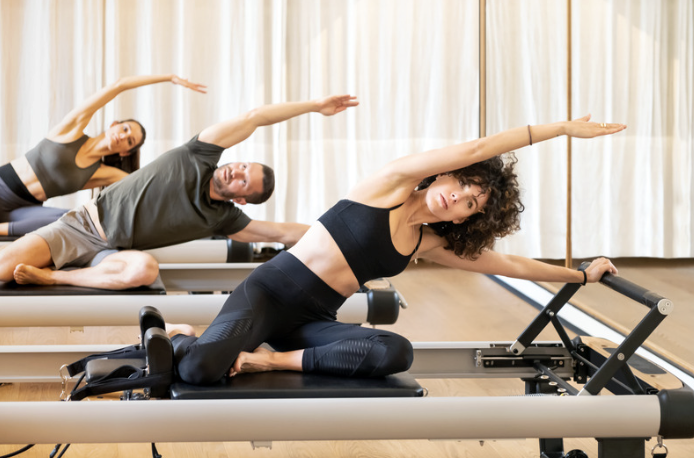
Pilates is a low-impact form of exercise that can be particularly helpful for improving core control, mobility, flexibility, posture, and body awareness.
Many adults over 40 enjoy Pilates because the movements are controlled and generally lower impact than jumping, running, or high-intensity group workouts.
Pilates can help with:
- Core control
- Mobility
- Flexibility
- Posture
- Balance
- Body awareness
- Low-impact movement
If you enjoy Pilates and it helps you stay active consistently, there is no reason you necessarily need to stop doing it.
What Is Strength Training Good For After 40?
Strength training uses resistance to progressively challenge your muscles, helping you maintain or build strength and muscle over time.
That becomes increasingly important as you get older because maintaining strength affects much more than how much weight you can lift in the gym.
Strength training can help support your ability to:
- Get up and down from the floor
- Carry groceries
- Climb stairs
- Lift things around the house
- Maintain balance and stability
- Stay active with your family
- Continue doing activities you enjoy
At Gage Strength Training, that's a big part of how we think about strength. The goal isn't simply to lift heavier weights. It's to build a body that feels capable outside the gym.
Is Pilates or Strength Training Better for Building Muscle?
Strength training is the more direct way to build muscle because resistance can be progressively increased as your body becomes stronger.
Pilates certainly challenges your muscles, but traditional resistance training makes progressive overload much easier to measure and control.
That might mean gradually increasing the weight, repetitions, range of motion, or difficulty of an exercise.
Over time, those small increases give your body a reason to adapt and become stronger.
Is Pilates or Strength Training Better for Fat Loss?
Neither Pilates nor strength training causes fat loss on its own. Fat loss ultimately depends on factors including nutrition, activity, and overall energy balance. However, strength training is particularly valuable during weight loss because it helps you maintain and build lean muscle.
This is an important distinction.
If you're trying to change your body after 40, the goal shouldn't necessarily be to make the scale drop as quickly as possible. You also want to preserve the muscle that helps you stay strong and capable.
That's why we often focus on body composition rather than simply chasing a lower number on the scale.
Pilates vs Strength Training After 40: Side-by-Side Comparison
| Goal | Pilates | Strength Training |
|---|---|---|
| Core control | Excellent | Helpful |
| Mobility & flexibility | Excellent | Can improve both |
| Building muscle | Some benefit | Primary benefit |
| Building strength | Some benefit | Primary benefit |
| Low-impact exercise | Excellent | Can be low impact |
| Everyday strength | Helpful | Excellent |
| Body composition | Can complement a program | Important for building/maintaining muscle |
| Balance & stability | Helpful | Helpful when programmed appropriately |
Do You Have to Choose Between Pilates and Strength Training?
No. Pilates and strength training can complement each other because they emphasize different physical qualities.
If you love Pilates, keep doing it.
You don't have to abandon workouts you enjoy just because you want to start lifting weights.
Instead, you could build your week around structured strength training and use Pilates for additional movement, mobility, core work, or simply because you enjoy it.
The best exercise routine is one that addresses your goals and that you can realistically maintain.
How Often Should Adults Over 40 Strength Train?
Many adults can benefit from performing muscle-strengthening exercise at least two days per week. Your ideal training frequency depends on your experience, goals, recovery, schedule, and current fitness level.
More isn't automatically better.
For someone getting back into exercise, two or three well-structured strength workouts each week can be much more realistic than trying to train every day.
The important part is having a program that progresses appropriately over time.
What If You've Never Lifted Weights Before?
You do not need previous strength-training experience to start. Beginners should start with exercises and resistance appropriate for their current ability and focus on learning good technique before increasing the challenge.
This is where coaching can make a big difference.
Instead of walking into a gym and trying to figure out which machines to use, how much weight to lift, or whether you're doing an exercise correctly, a coach can build the program around where you're starting.
At Gage, we don't expect you to get in shape before you come in.
The whole point is to meet you where you are and help you get stronger from there.
Is Strength Training Safe If You Have Aches or Pains?
Many exercises can be modified around individual limitations, but the appropriate approach depends on the person and the cause of their symptoms.
Strength training does not have to mean heavy barbells or pushing through pain.
A coach can adjust:
- The exercise
- The resistance
- Your range of motion
- The number of repetitions
- Your position
- The pace of progression
If you have an injury or medical condition, you should follow the guidance of the appropriate healthcare professional before beginning or changing an exercise program.
Frequently Asked Questions About Pilates vs Strength Training
Is Pilates enough exercise after 40?
Pilates can be a valuable part of an exercise routine, particularly for mobility, core control, flexibility, and low-impact movement. However, adults should also include activities that specifically strengthen the major muscle groups.
Should women over 40 lift weights?
Resistance training can be particularly valuable for women over 40 because it helps maintain and build muscle and strength. A program should be appropriate for your experience and current ability.
Will strength training make women bulky?
Strength training does not automatically create a bulky appearance. Significant muscle growth typically requires consistent progressive training over an extended period of time.
Can you do Pilates and strength training together?
Yes. Pilates and strength training can work well together. Strength training can focus on building muscle and strength, while Pilates can provide additional mobility, core work, flexibility, and movement practice.
Which is better for beginners: Pilates or strength training?
Both can be appropriate for beginners when properly coached. The better choice depends on your goals. If your main goal is getting stronger and building muscle, structured strength training should be part of your routine.
How many days a week should I strength train after 40?
At least two days of muscle-strengthening activity per week is a common recommendation for adults. Some people may benefit from additional sessions depending on their goals, experience, and recovery.
Is strength training better than Pilates for weight loss?
Weight loss depends largely on overall energy balance. Strength training can be especially useful during a weight-loss program because it helps maintain or build lean muscle while you work toward reducing body fat.
The Bottom Line: Pilates or Strength Training After 40?
If your primary goals after 40 are getting stronger, maintaining muscle, improving body composition, and staying physically capable as you age, strength training should be an important part of your routine.
That doesn't mean you have to give up Pilates.
Pilates can be an excellent complement to strength training, particularly if you enjoy it and value the mobility, flexibility, core control, and low-impact movement it provides.
The goal isn't to find one "perfect" workout.
It's to build a routine that gives your body what it needs and that you can continue doing consistently.
Ready to Get Stronger?
At Gage Strength Training, we help adults build strength, improve their fitness, and feel more confident in the gym with structured, coached strength training.
You don't need to already be in shape. You don't need to know how to lift weights. And you don't need to figure everything out on your own.
Our coaches will meet you where you are and help you build from there.
Reach out to Gage Strength Training to learn more and find out if our program is right for you.
About Gage Strength Training
Gage Strength Training helps adults become stronger, healthier, and more confident through structured strength training and professional coaching. Our programs are designed to meet clients at their current ability level and help them make sustainable progress over time.